Modern biochar
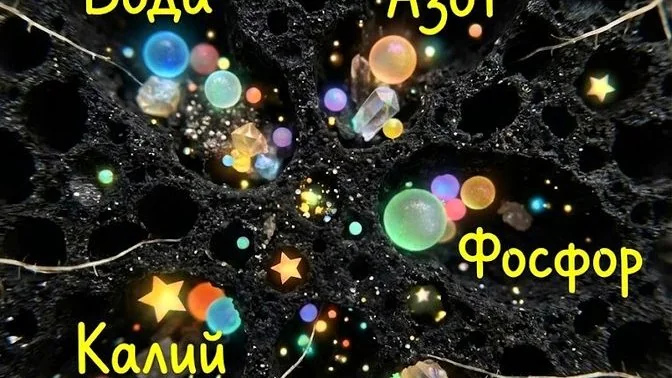
Why the story of biochar is not over at all
The history of biochar often makes a strange impression.
It seems as though everything has long been known.
The ancient inhabitants of the Amazon learned to create extraordinarily fertile soil.
Modern scientists have unravelled the secret of Terra Preta.
All that is left is to repeat the ancient technology.
But science is rarely that simple.
As soon as researchers examined biochar closely, dozens of new questions arose.
Why does one biochar work better than another?
How does pyrolysis temperature affect it?
Does the result depend on the wood species?
Can the material be made even more effective?
How can plants be helped as early as the first season after application?
And finally — are there limits to what biochar can do?
It was the search for answers to these questions that turned an ancient material into one of the most interesting fields of modern soil science.
Chapter one. Biochar is not a single material
Imagine that someone says:
"I bought a car."
What exactly did they buy?
A subcompact?
An SUV?
A truck?
A racing car?
They are all called cars, but their capabilities are completely different.
Something similar happens with biochar.
Very often people speak about it as though there were one single "correct" biochar.
In reality, this name covers a whole family of materials.
They can differ markedly in their properties, even though outwardly they look almost identical.
It all starts with the feedstock
The first thing that determines the properties of the future biochar is the starting material.
Birch.
Oak.
Beech.
Pine.
Rice husks.
Nut shells.
Straw.
Bamboo.
Even coffee husks.
After pyrolysis all of these materials turn into biochar.
But their internal structure differs.
And that means the structure of the future pores differs too.
For example, wood species usually form a strong carbon framework with a well-developed system of channels inherited from the vascular tissue of the tree.
Agricultural residues often give a completely different structure.
That is why it is impossible to say:
"All biochar is the same."
That would be just as wrong as claiming that all kinds of wood have the same density or strength.
Temperature changes everything
Pyrolysis temperature turns out to be even more important.
Imagine an oven.
If bread is baked at too low a temperature, it stays raw.
If the temperature is too high, it burns.
Something similar happens with biochar.
During pyrolysis the wood gradually loses moisture, then volatile organic compounds decompose, the structure of the carbon changes and a porous framework is formed.
Each temperature range leaves the material with its own set of properties.
At relatively low temperatures more organic compounds are retained, which can serve as an additional source of nutrition for soil microflora.
At higher temperatures a particularly stable carbon framework with a well-developed system of micropores is formed.
Engineers select the pyrolysis regime just as carefully as metallurgists select the heat-treatment regime for steel.
A few dozen degrees can noticeably change the properties of the final product.
Pyrolysis temperature affects not only the chemical composition of biochar, but also its acidity, internal surface area, water holding capacity and even the activity of soil microorganisms after application.
Biochar ages… and gets better
Materials usually lose their properties over time.
Plastic breaks down under ultraviolet light.
Metal becomes covered with corrosion.
Concrete cracks.
With biochar we see almost the opposite picture.
Once in the soil, it begins to change slowly.
Scientists call this process "ageing", although the word is not entirely apt.
In reality it is closer to maturing.
At first the surface of the granules is almost chemically neutral.
But new active sites gradually appear on it.
Mineral substances settle on the pore walls.
Organic molecules form the thinnest of films.
Microorganisms colonize the internal cavities.
Every granule becomes part of a living soil ecosystem.
After a few months biochar is already noticeably different from the material that has only just come out of the pyrolysis unit.
And after a few years the differences become even more pronounced.
One could say that biochar is one of the few materials that continues to develop after it has been produced.
Why scientists still disagree
If you open modern scientific publications, you may be surprised.
Some studies show an impressive increase in yield.
Others record only small changes.
Sometimes the effect is barely noticeable.
Why does this happen?
The answer turned out to be far more complicated than expected.
There is no universal biochar.
There is no universal soil.
There is no universal climate.
A material that works beautifully on acidic sandy soils may show a far more modest result on fertile chernozem.
The same applies to crops.
Potatoes.
Tomatoes.
Wheat.
Grapes.
Every crop interacts with the soil a little differently.
That is why modern science is gradually abandoning the question:
"Does biochar work?"
And asks a far more interesting question:
"Under what conditions does it reveal its potential best?"
This is where the next chapter of our story begins — about why one and the same material can behave completely differently in different soils, and how scientists have learned to prepare it for work in advance.
Chapter two. Why biochar first has to be "fed"
Imagine that you have built a brand-new residential district.
Modern buildings.
Wide streets.
Clean water.
Electricity.
Squares.
Parks.
But there is one problem.
Nobody lives in this city yet.
There are no doctors.
No teachers.
No shops.
No children playing in the courtyards.
Not even cats.
A beautiful city does not become alive on its own.
It needs residents.
Almost the same thing happens with biochar.
After pyrolysis its internal structure is already ready for work.
Millions of pores.
An enormous surface area.
A branching system of microchannels.
But all of this is still empty.
That is precisely why modern agronomists increasingly say:
biochar has to be activated.
Or, as is more often said in practice,
charged.
Where the "nitrogen pit" came from
Many people first encounter this term on gardening forums.
Someone writes:
"I applied fresh biochar — and the plants started growing worse."
Another replies:
"That is the nitrogen pit."
It sounds almost frightening.
In reality there is, of course, no pit in the soil.
There is a perfectly understandable physical process.
Think of a new kitchen sponge.
Try dripping a little water onto it.
What will happen?
Almost all of the water instantly disappears inside.
Until the sponge is saturated, it will absorb practically everything.
Fresh biochar behaves very similarly.
Its numerous pores begin to absorb moisture, dissolved mineral substances and nitrogen compounds intensively.
Plants may meanwhile feel a slight temporary shortage of available nutrition.
It is important to understand:
biochar destroys nothing.
It does not "eat" anything.
It merely retains part of the dissolved substances inside its structure for a time.
When the pores become saturated and a stable microbial ecosystem forms within them, the process reverses.
Now biochar no longer absorbs so much as it gradually begins to release the accumulated substances back.
That is why many researchers prefer to speak not of a "nitrogen pit" but of a saturation period.
This definition is far more accurate.
How scientists solved the problem
Once the mechanism became clear, a natural question arose.
If biochar has to become saturated with nutrients first anyway, why not do this in advance?
That is how the technology of pre-activation appeared.
Today it is used practically all over the world.
The idea is remarkably simple.
Biochar is mixed with rich organic matter before it is applied to the soil.
Instead of taking nutrients from the bed, it receives them in advance.
One could say that the material arrives in the field already fully prepared for work.
What happens inside a granule
This is where the real chemistry begins.
Not laboratory chemistry — natural chemistry.
Compost contains an enormous amount of dissolved organic substances.
Mineral elements.
Amino acids.
Humic compounds.
Colonies of beneficial microorganisms.
When biochar is mixed with such a material, its pores gradually begin to fill.
Some of the substances are retained on the internal surfaces.
Some become food for microorganisms.
Some form stable organo-mineral complexes.
If you look at the process under a microscope, you can see how in just a few days lifeless cavities turn into densely populated micro-worlds.
Bacterial colonies appear.
Fungal hyphae spread.
Thin biofilms form.
Every pore becomes a tiny ecosystem.
That is why some soil scientists figuratively call activated biochar "a seed of the future soil".
Compost turned out to be the ideal partner
Interestingly, biochar and compost complement each other almost perfectly.
Compost is rich in life.
But it decomposes quickly.
Biochar is extremely durable.
But immediately after production it is almost empty.
One provides nutrition.
The other provides space.
One works quickly.
The other — for decades.
By combining them, we obtain a system in which the advantages of each material reinforce those of the other.
That is why modern agronomy increasingly speaks not of biochar on its own but of biochar–compost systems.
Can biochar be charged with mineral fertilisers?
Yes.
But there is an important nuance here.
If only mineral fertilisers are used, biochar will indeed accumulate part of the nutrients.
However, it will remain practically uninhabited.
Imagine a modern city where warehouses full of food have been built but there are no residents.
Such a city will not be able to develop.
Organic materials work differently.
They bring not only nutrition.
They bring life.
That is why the best results are usually achieved when biochar is combined with compost, vermicompost, fermented organic fertilisers or specially selected microbial inoculants.
In the first weeks after activation, stable microbial communities begin to form in the pores of the biochar. In essence, every granule becomes a miniature "incubator" of soil life, which is then transferred directly into the root zone.
From a material to a technology
This is probably where the boundary lies between the traditional and the modern understanding of biochar.
It used to be seen as a separate product.
Today people increasingly speak of an entire technology.
What matters is not only what is applied to the soil.
What also matters is the condition in which the material is applied.
How it has been prepared.
Which microorganisms already inhabit its pores.
Which substances they are saturated with.
Which tasks have to be solved in this particular soil.
That is why modern producers increasingly offer not one universal biochar but a whole line of specialized solutions.
The next step in the evolution
Once scientists had learned to activate biochar, a new question arose.
If we can already populate it with beneficial microflora, why not take the next step?
Is it possible to turn every granule into a carrier of strictly defined microorganisms, which will help plants obtain nitrogen, dissolve phosphorus, protect roots from disease or stimulate growth?
The answer turned out to be yes.
This is precisely the field that is considered today one of the fastest-growing in global agroecology.
We will talk about it in the next chapter. That is where biochar ceases to be merely a soil improver and turns into a high-tech platform for living biological preparations.
Chapter three. A living technology: when biochar becomes a home for microorganisms
If we could shrink to the size of a soil bacterium and set off on a journey through a handful of fertile earth, a completely different world would open up before us.
This is not simply a mixture of sand, clay and humus.
It is an enormous living metropolis.
Billions of organisms are constantly working, interacting, competing and helping one another.
Some decompose fallen leaves.
Others turn complex organic compounds into substances available to plants.
Still others protect roots from pathogenic fungi.
A fourth group helps plants extract nutrients from compounds that the roots themselves are unable to use.
Every square centimetre of healthy soil resembles a busy city where nobody is left without work.
And the more diverse this life is, the more resilient the whole ecosystem.
Soil is a living organism
Half a century ago soil was often seen as an inert base to which it was enough to add water and fertiliser.
Today this view is considered far too simplistic.
Modern soil science regards soil as an extremely complex biological system.
A single gram of fertile earth may contain:
- billions of bacteria
- hundreds of metres of fungal hyphae
- thousands of species of microorganisms
- protozoa
- microscopic algae
- nematodes
- and many other inhabitants.
Each performs its own function.
Some fix atmospheric nitrogen.
Others dissolve sparingly soluble phosphorus compounds.
Still others synthesize substances that stimulate development of the root system.
It turns out that a significant part of plant nutrition is created not by fertilisers at all, but by the life of the soil itself.
Why microorganisms also need a home
Let us imagine a heavy summer rain.
A few hours later the soil surface begins to dry out.
The temperature rises quickly.
Moisture evaporates.
For many microorganisms this is real stress.
Some go dormant.
Others die.
Still others are forced to migrate deeper.
Now let us recall the structure of biochar.
We already know that every granule consists of millions of pores of different sizes.
But these pores matter not only for water.
They become a refuge.
Inside, moisture remains more stable.
The temperature changes more slowly.
Microorganisms are protected from ultraviolet radiation and from many soil predators.
One could say that biochar builds a real residential complex for soil life.
Mycorrhiza — an ancient alliance of plants and fungi
Some of the most remarkable inhabitants of the soil are mycorrhizal fungi.
They appeared long before humans.
It was thanks to this alliance that the first plants were able to colonize dry land hundreds of millions of years ago.
The principle of their work is remarkably elegant.
The fungus wraps the plant's roots in the finest network of threads — hyphae.
These hyphae extend far beyond the root system, exploring an enormous volume of soil.
One can picture the plant as a small city and the mycelium as a network of high-speed motorways connecting it with the surrounding world.
Along these "roads", water, phosphorus, micronutrients and other substances reach the roots — substances the roots themselves would never have reached.
In exchange, the plant shares with the fungus part of the sugars produced in its leaves through photosynthesis.
This is one of the most successful examples of mutually beneficial cooperation in nature.
Biochar helps the alliance
Research shows that the well-developed porous structure of biochar can create favourable conditions for the development of mycorrhizal fungi.
The pores protect young hyphae from drying out.
Organic films on the surface become an additional habitat.
As a result, the mycelium colonizes the surrounding soil faster.
This does not mean that biochar "creates" mycorrhiza.
But it is able to make the environment for its development considerably more comfortable.
That is why many modern studies regard biochar and mycorrhizal inoculants as complementary technologies.
Bacteria — nature's invisible chemists
If fungi can be compared to the transport system of the soil, then bacteria are its chemical industry.
They do work that no machine could replace.
Some species fix atmospheric nitrogen and convert it into compounds available to plants.
Others convert sparingly soluble phosphorus into forms that roots can take up.
Still others decompose organic residues, releasing nutrients.
There are even bacteria capable of producing natural antibiotics, suppressing the development of pathogenic microorganisms in the root zone.
Modern agrobiology increasingly regards these microscopic organisms as natural allies of farming.
Biochar as transport for beneficial microflora
This is where research reaches a completely new level.
An idea arises:
if biochar protects microorganisms so well, why not use it as a carrier for specially selected bacterial cultures?
That is how the first commercial developments appeared in which biochar becomes not merely a soil improver but a kind of transport for beneficial microbiota.
After application to the soil, the microorganisms find themselves not on an open surface where drought, ultraviolet light or competitors could quickly destroy them.
They are already inside a protected porous structure.
Such a solution helps them adapt faster and start working.
Of course, the effectiveness of such preparations depends on many factors: the composition of the microbial culture, the soil type, moisture, temperature and farming practices. But the idea itself proved so promising that today research groups in many countries are actively studying this field.
Modern research shows that the composition of the soil microbiota may be no less important for yield than the amount of fertiliser applied. That is precisely why more and more attention is being paid not only to soil chemistry but also to soil biology.
From biochar to "smart" soil
Perhaps the main change of the past twenty years lies not in the appearance of a new material.
The very understanding of fertility has changed.
It used to be thought that it was enough to add the right amount of nitrogen, phosphorus and potassium to the soil.
Today it is becoming clear that this is not enough.
Fertile soil is not simply a store of nutrients.
It is a complex living system in which minerals, organic matter, water, air and billions of microorganisms continuously interact with one another.
Biochar proved valuable precisely because it helps maintain these connections.
It does not replace nature.
It helps nature work more efficiently.
The next stage of development
Once scientists had learned to use biochar as a basis for living biological preparations, another logical question arose.
If the microflora can be changed, can we also change the composition of the biochar itself, so that it is better suited to particular crops, soil types or climatic conditions?
The answer turned out to be yes.
Today materials are being created with mineral additives, micronutrients, different acidity, specific pore sizes and even different nutrient release regimes.
This is how a new chapter of the story begins — the story of engineered biochar, which is designed for specific tasks in agriculture rather than being a universal product for all occasions. This is exactly what the next chapter is devoted to.
Chapter four. Engineered biochar: why one size does not fit all
If you ask an agronomist to name the ideal soil, they will most likely first ask a question in return:
— For which crop?
For grapes?
For potatoes?
For blueberries?
For an apple orchard?
For greenhouse tomatoes?
The answer will be different in each case.
Every plant places its own demands on the soil. Some need good drainage, others increased water holding capacity. Some feel better on slightly acidic soils, others prefer an almost neutral reaction.
That is why modern agronomy is gradually moving away from the idea of universal solutions.
The same evolution is taking place with biochar.
From a universal material to specialized solutions
In the first years of research, biochar was viewed quite simply.
Charcoal was obtained by pyrolysis.
It was ground.
It was applied to the soil.
However, the accumulation of scientific data showed that the properties of the material can be tuned quite finely.
And not in one way, but in several at once.
Today engineers work with several parameters at the same time.
Each of them is capable of changing how the material behaves in the soil.
Particle size
At first glance this seems to be a matter of convenience.
In fact it is not.
A very fine fraction is distributed through the whole soil volume faster and has a large contact area.
But there is a downside.
It compacts more easily.
It produces more dust during application.
It can become saturated with moisture faster.
Coarse granules work differently.
They preserve air-filled cavities better.
They break down more slowly.
They are especially useful on heavy clay soils.
That is why modern producers increasingly offer several fractions — for different purposes.
Pore structure
The situation with the internal architecture of biochar is even more interesting.
In the first article we already said that pores come in different sizes.
But now scientists have learned to control this ratio.
By changing the pyrolysis regime, the heating rate and even the cooling method, it is possible to obtain materials with different proportions of micro-, meso- and macropores.
This is similar to designing a building.
You can build a warehouse.
You can build a hotel.
You can build a residential house.
Outwardly they all look like buildings.
But they are intended for completely different purposes.
Chemical activity of the surface
Just ten–fifteen years ago far less attention was paid to this parameter.
Today the surface of biochar is considered one of the key areas of research.
After special treatment methods, additional active sites appear on it.
They retain dissolved mineral substances more effectively.
They interact with organic compounds faster.
They are colonized by microorganisms better.
In effect, this is fine-tuning of the properties of the material at the molecular level.
Can biochar be created for a specific crop?
Not so long ago such an idea would have seemed like science fiction.
Today it is gradually becoming reality.
Let us imagine two completely different tasks.
The first — growing blueberries.
This crop prefers acidic soils and is highly sensitive to an excess of calcium.
The second is an intensive apple orchard.
Here entirely different characteristics matter: good water holding capacity, long-term accumulation of soil organic matter and stability of soil structure.
Obviously, the optimal solutions will differ.
That is why researchers increasingly speak not of the "best biochar" but of biochar for a specific task.
Just as there are special motor oils for different engines or different grades of concrete for different structures, materials are appearing that are tailored to particular crops and growing technologies.
Biochar and precision agriculture
Modern agriculture is rapidly becoming digital.
Drones map fields.
Satellites assess the condition of crops.
Sensors continuously measure soil moisture, temperature and electrical conductivity.
Increasingly, decisions are made not "by eye" but on the basis of large data sets.
In this system biochar ceases to be merely an additive.
It becomes one of the tools for managing soil properties.
For example, if analysis shows a low soil organic matter content and poor water holding capacity, applying biochar may become part of a comprehensive program for restoring the site.
If the problem is related to structural degradation after many years of intensive tillage, the objectives will be different.
This is precisely why specialists increasingly consider biochar not in isolation but as part of precision agriculture technology.
In a number of research projects biochar is treated as one component of "digital farming": data on soil type, moisture, acidity and organic matter content help to select not only the application rate but also the optimal type of material.
Why you cannot judge from a single experiment
Headlines like this often appear online:
"Biochar increased tomato yield by 40%."
Or the opposite:
"Biochar had no effect at all."
Both statements may be true.
And at the same time — misleading.
Imagine a test of car tires.
Some test them in winter on ice.
Others — in summer on dry asphalt.
Still others — on a dirt road.
The results will inevitably differ.
The same thing happens with biochar.
Dozens of factors affect the outcome:
- soil type
- climate
- amount of precipitation
- crop
- tillage technology
- irrigation regime
- fertiliser composition
- the quality of the biochar itself.
That is why modern science does not try to look for universal answers.
It looks for patterns.
It is precisely this approach that makes it possible to gradually turn accumulated knowledge into reliable engineering solutions.
From experiments — to new materials
Over the past twenty years biochar research has come a long way.
From attempts to reproduce the ancient Terra Preta, scientists have moved on to designing materials with predetermined properties.
This is no longer simply a reproduction of a historical technology.
It is the creation of new solutions based on it.
And perhaps it is here that the story comes full circle.
Long ago the inhabitants of Amazonia, without knowing it themselves, began one of the longest experiments in the history of agriculture.
Today it is being continued by scientists, engineers and manufacturers all over the world — now armed with microscopes, spectrometers, computer modelling and precise knowledge of the processes taking place inside every granule.
But the goal remains the same.
To create a soil that will work better not for a single season but for many years.
Myths about biochar: what is true and what is a common misconception?
In recent years many contradictory opinions have grown up around biochar. Some call it a "revolution in agriculture", others consider it ordinary charcoal, and still others expect it to increase yields instantly.
The truth, as often happens in science, lies between these extremes.
Let us look at the most common misconceptions.
Myth No. 1. Biochar is just ordinary charcoal
Why people think so
Outwardly the two materials really are similar.
Black.
Light.
Made from wood.
That is where the similarity ends.
What actually happens
Charcoal has traditionally been produced primarily as a fuel.
The main requirement for it is a high calorific value.
Biochar is created for an entirely different purpose.
Its task is to preserve the most highly developed internal structure of the wood and to obtain a material with specified physical and chemical properties.
That is why manufacturers pay close attention to:
- the choice of feedstock
- the pyrolysis temperature
- the heating rate
- the residence time
- the cooling method
- the subsequent preparation of the material.
It is these parameters that determine how effectively biochar will be able to work in the soil.
In other words, any biochar is a carbon material, but by no means every charcoal can be called a high-quality biochar.
Myth No. 2. Biochar is a fertiliser
This is one of the most widespread misconceptions.
The logic seems obvious.
If plants start growing better, then biochar must be "feeding" them.
But that is not the case.
What actually happens
Imagine a modern refrigerator.
It keeps food perfectly well.
But it does not produce food itself.
Biochar works in a similar way.
It is hardly a source of the main plant nutrients.
Its task is to help retain water, hold dissolved mineral substances, create a favourable environment for microorganisms and increase the efficiency of fertilisers that have already been applied.
That is precisely why specialists often call biochar not a fertiliser but a soil improver.
These are fundamentally different concepts.
Myth No. 3. The more biochar the better
Such an opinion seems quite logical.
If a material is useful, then as much of it as possible should be applied.
But soil is too complex a system for such simple solutions.
What actually happens
The amount always depends on the specific task.
On the soil type.
On the crop being grown.
On the availability of organic fertilisers.
On the tillage method.
On some sites a small amount of high-quality biochar can give a better result than a many times larger dose applied without regard for the characteristics of the soil.
Modern agronomy almost never answers the question with the words "the more the better".
It answers with the words "as much as is needed in this particular place".
Myth No. 4. Biochar starts working instantly
After buying it many people expect to see a result within a few weeks.
Sometimes that really does happen.
But more often the picture turns out to be more complicated.
What actually happens
Biochar needs time.
It has to become saturated with water.
To fill up with nutrients.
To be colonized by microorganisms.
Inside the granules a microbial ecosystem of its own gradually forms.
An analogy can be drawn with a new fruit orchard.
After planting, trees do not give a maximum harvest in the very first year.
They need to take root.
To develop.
The same happens with biochar.
In many studies the most pronounced effect is observed not immediately but after several seasons.
It is precisely this that makes it a long-term soil improver.
Myth No. 5. Biochar is suitable for absolutely any conditions
Sometimes advertising materials create the impression that there is a universal solution for any soil and any crop.
Science says otherwise.
What actually happens
The effectiveness depends on many factors.
For example:
- the soil texture
- the acidity
- the organic matter content
- the moisture
- the irrigation regime
- the climate
- the farming technology used.
That is why a good specialist first asks about the condition of the site and only then recommends a specific application scheme.
Biochar is a tool.
Like any professional tool, it gives the best results when it is used for its intended purpose.
Myth No. 6. Biochar will solve all soil problems
This is perhaps the most dangerous misconception.
Any technology that comes to be regarded as a universal cure inevitably disappoints.
What actually happens
Biochar cannot replace sound agricultural practice.
It does not remove the need to:
- maintain soil fertility
- apply organic matter
- observe crop rotation
- control acidity
- provide plants with water.
But it can significantly increase the effectiveness of all these measures.
That is precisely why modern specialists regard biochar not as a stand-alone solution but as part of an integrated fertility management system.
What modern science says
If you follow the research of the past two decades closely, an interesting pattern can be noticed.
The number of questions such as "does biochar work at all?", is gradually decreasing.
Today scientists are far more interested in other topics:
- which types of feedstock provide the best material structure
- how the pyrolysis temperature affects it
- which activation methods are the most effective
- how biochar interacts with compost and biological preparations
- which combinations are best suited to different crops and climatic zones.
In other words, the scientific discussion has shifted from the question "is biochar needed?" to the question "how can it be used as effectively as possible?"
This is perhaps the most convincing sign of the maturity of any technology. When arguments about the very fact of its existence cease, work on the details begins. That is exactly what is happening today with biochar — a material whose history goes back thousands of years and whose most interesting discoveries may still lie ahead.
And what happens when biochar finally reaches the ground? That is the subject of the third and final article.